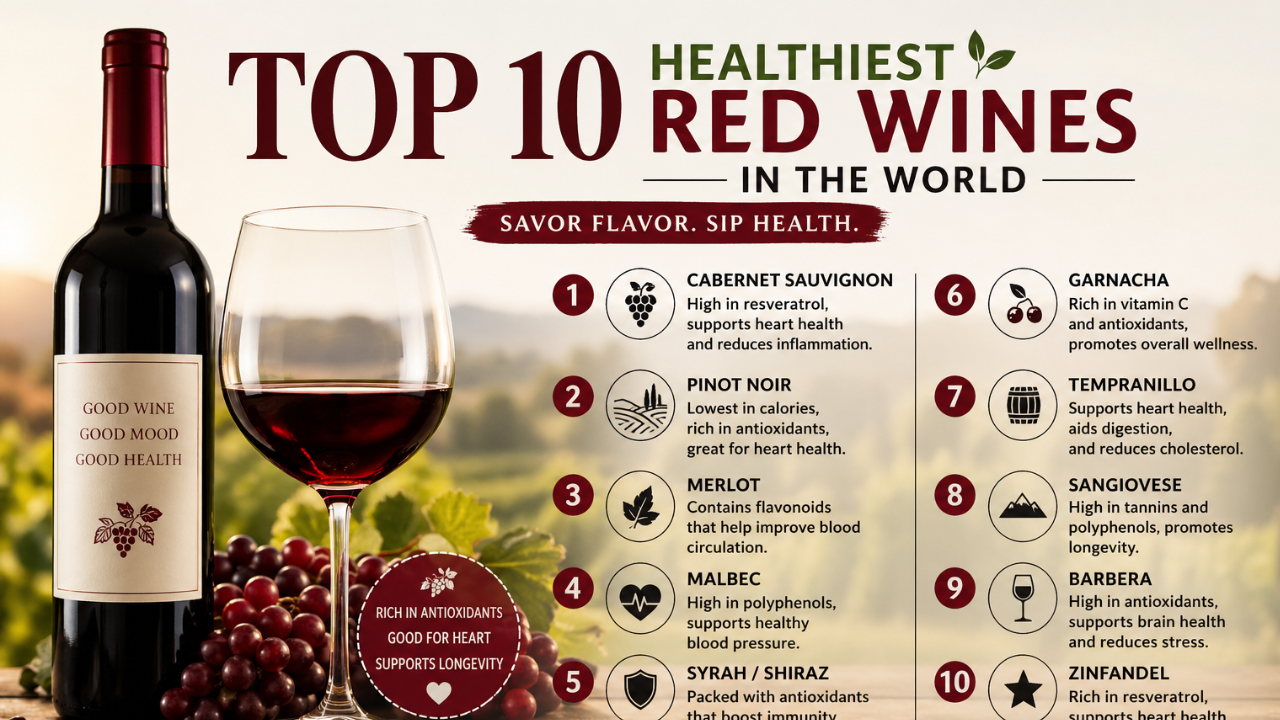
Pour yourself a glass — it’s time to talk about the healthiest red wines you can drink. For decades, scientists, cardiologists, and nutritionists have explored the relationship between moderate red wine consumption and human health. And while the research is nuanced (and moderation is key), the evidence is clear on one thing: not all red wines are created equal when it comes to health benefits.
Some red wines are dramatically richer in polyphenols, resveratrol, procyanidins, and anthocyanins than others — compounds that have been scientifically linked to heart health, reduced inflammation, better brain function, and even longevity. Choosing the right type of red wine matters far more than most people realize.
Important Disclaimer: This article is for informational purposes only. The potential health benefits of red wine apply strictly to moderate consumption — typically defined as one 5 oz glass per day for women and up to two for men. Excessive alcohol consumption is harmful. Always consult your doctor before making changes to your diet or alcohol intake.
What Makes a Red Wine “Healthy”?
Before ranking the healthiest red wines, it’s worth understanding what compounds actually drive the health benefits — because this determines which wines deserve the top spots on the list.
Polyphenols
Polyphenols are a broad family of plant compounds found in grape skins, seeds, and stems. Nearly everything in wine, apart from alcohol and water, is a polyphenol — including tannins, pigments, aromas, resveratrol, procyanidins, and thousands of other plant compounds. They act as powerful antioxidants, combating cell-damaging free radicals that contribute to aging, cancer, and cardiovascular disease.
Resveratrol
Resveratrol is the most famous health compound in red wine. Resveratrol might help prevent damage to blood vessels and prevent blood clots. It may lower low-density lipoprotein (LDL) cholesterol — the “bad” cholesterol. It’s found in the skins of red grapes, which is why red wine contains far more of it than white wine.
Procyanidins
Of all the polyphenols, the most abundant in wine for health reasons are procyanidins. These inhibit cholesterol plaque in blood vessels, making wine heart-healthy. Procyanidins are linked not just to heart health but also to anti-aging effects and improved longevity.
Anthocyanins
These are the red, blue, and purple pigment compounds responsible for red wine’s deep color. Anthocyanins have many antioxidant and anti-inflammatory properties, including their ability to lower high blood pressure and help manage weight loss.
Why Red Wine Over White?
Red wines contain around 10 times more polyphenols than white wine. This is because the winemaking methods allow the fresh juice to stay in contact with the grape skins for an extended period of time, extracting the highest concentration of polyphenols that end up in the wine.
Now, here are the top 10 healthiest red wines, ranked by their antioxidant density and science-backed health benefits.
1. Sagrantino — The Most Antioxidant-Dense Wine in the World
Origin: Umbria, Central Italy Health Claim: Highest procyanidin and polyphenol content of any wine grape
If there’s one red wine that scientists consistently point to as the healthiest, it’s Sagrantino — a rare, deeply pigmented red from the Montefalco region of Umbria, Italy.
Sagrantino contains about 4,174 mg/kg of polyphenols, while Cabernet Sauvignon, comparatively, has roughly 2,200 mg/kg. That’s nearly double the polyphenol content of one of the world’s most popular red wines. Wine researcher Roger Corder noted that Sagrantino “is not only rich and powerful, it also has one of the highest procyanidin contents I’ve ever found.”
Its tannin-rich skins offer numerous antioxidants, including many procyanidins, which offer benefits from protecting the body from cancer to increasing brain function.
What it tastes like: Dark, dense, and bold. Expect notes of blackberries, black cherries, blueberries, cocoa, and black tea. Sagrantino is extremely tannic when young and must typically be aged several years to soften and fully integrate its flavors.
Best enjoyed with: Slow-braised meats, wild boar, aged cheeses, and hearty pasta dishes.
2. Tannat (Madiran) — The Heart Health Champion
Origin: Southwest France (Madiran); also Uruguay Health Claim: Up to 4x the procyanidins of average red wine
Tannat is perhaps the most medically celebrated red wine in the world when it comes to cardiovascular health. Tannat wines can contain up to four times the procyanidins of an average glass of red wine (120 mg/L vs 30–40 mg/L).
The evidence for Tannat’s health benefits isn’t just laboratory-based — it’s written into the demographics of the people who drink it. The long-living people of Gers in southwest Midi-Pyrenées, France enjoy drinking their local Madiran wine, composed principally of the Tannat grape — one very high in antioxidants.
Tannat is a close second to Sagrantino in polyphenolic content, and Uruguay has begun producing fantastic examples of it which are usually easier on the wallet. Uruguayan Tannat tends to be slightly smoother with more expressive fruit character, making it a more accessible entry point for newcomers.
What it tastes like: Intense dark fruit (blackberry, plum), smoke, leather, and firm tannins. French Tannat from Madiran is bold and structured; Uruguayan Tannat is slightly softer and more fruit-forward.
Best enjoyed with: Grilled red meats, lamb, duck confit, and strong aged cheeses.
3. Pinot Noir — The Best Balance of Health and Drinkability
Origin: Burgundy, France; Oregon; Sonoma Coast, California Health Claim: Highest resveratrol content among widely available red wines; lower alcohol and calories
Pinot Noir is the wine most people cite when discussing healthy red wine — and for very good reason. Pinot Noir has the highest concentration of resveratrol antioxidants. Additionally, while most red wines have low or non-existent residual sugars, Pinot Noir often has a lower initial sugar pre-fermentation, resulting in lower alcohol and fewer calories in the finished wine compared to a higher alcohol wine like Cabernet Sauvignon.
There’s a fascinating science story behind Pinot Noir’s high resveratrol levels. Cornell researcher and Professor Emeritus Leroy Creasy discovered that Pinot Noir grapes, grown in cool, rainy places, had to fight off fungus and bacteria — and the vine stress from this disease pressure is identified as a key factor in the vine’s production of high levels of resveratrol. The vines produce this antioxidant as a protective measure for the grapes. These cool-climate Pinot Noirs exist in Burgundy, Oregon, and the Sonoma Coast of California.
What it tastes like: Light to medium-bodied with flavors of red cherry, raspberry, earthiness, and subtle spice. Silky, elegant, and versatile.
Best enjoyed with: Salmon, duck, mushroom risotto, grilled chicken, and charcuterie boards.
4. Cannonau (Grenache from Sardinia) — The Longevity Wine
Origin: Sardinia, Italy Health Claim: 2–3x the flavonoids of average red wines; linked to exceptional lifespan
Cannonau — the local Sardinian name for the Grenache grape — occupies a unique and extraordinary place in the healthiest red wine conversation. Sardinia is one of the five “Blue Zones” in the world — regions identified by National Geographic where people regularly live to 100 years or older. The daily consumption of Cannonau wine is considered a contributing factor.
Cannonau has two to three times the number of flavonoids as other red wines, containing even more antioxidant and anti-inflammatory properties. A daily glass of Cannonau is one of the reasons Sardinia is amongst the Blue Zones of the world with a higher concentration of centenarians — people who live 100 years or more.
The Cannonau grape generates high concentrations of polyphenols and anthocyanins due to its late ripening and harvesting periods compared to other grapes. As these grapes develop their thick skins, their heart-health compounds increase, contributing to the health of those who drink their wines.
What it tastes like: Warm, ripe red cherries, blackberries, dried herbs, and a hint of spice. Ranges from medium to full-bodied with a velvety texture.
Best enjoyed with: Lamb, roasted pork, Mediterranean cuisine, aged Pecorino cheese.
5. Malbec — The Thick-Skinned Antioxidant Powerhouse
Origin: Argentina (Mendoza); originally from southwest France Health Claim: 2–4x the antioxidants of other popular reds; extremely high resveratrol
Malbec is one of the most approachable and widely loved red wines on this list — and it also happens to be one of the most antioxidant-dense. The secret lies in its distinctively thick grape skins.
As an especially thick-skinned variety, Malbec claims higher antioxidant levels than other red wines, especially in terms of resveratrol. This variety has two to four times the amount of anti-inflammatory, health-boosting antioxidants than other popular red wines like Cabernet Sauvignon and Merlot.
Resveratrol is found in the skin of red grapes. Malbec has a thick skin and contains much resveratrol. Vine grapes grown in cooler climates have higher resveratrol levels than those from warmer climes. This means high-altitude Malbecs from Argentina’s Mendoza region — grown at elevations often exceeding 3,000 feet — tend to have the highest health-boosting compound concentrations.
What it tastes like: Plush, full-bodied with rich flavors of blackberry, plum, chocolate, and violet. Smooth tannins and a velvety finish.
Best enjoyed with: Grilled steak, barbecue, beef empanadas, and dark chocolate.
6. Nebbiolo (Barolo & Barbaresco) — The Sleep-Promoting Antioxidant Wine
Origin: Piedmont, Italy Health Claim: High procyanidins and polyphenols; highest melatonin content of any wine grape
Nebbiolo is the grape behind two of Italy’s most revered wines — Barolo and Barbaresco — and it brings impressive health credentials alongside its prestigious reputation.
The polyphenols present in Nebbiolo red wine can prevent cancer, cardiovascular diseases, diabetes, and neurological diseases in the body. Procyanidins in this wine are the specific polyphenols that give many health benefits.
But Nebbiolo has an additional, unique health benefit that no other wine on this list can claim: Nebbiolo contains the most melatonin of any wine grape — meaning that if you’re looking for a good night’s sleep, Nebbiolo may be the wine to drink at dinner time.
Nebbiolo grapes contain anywhere from two to six times as much polyphenol as other more popular varieties like Pinot Noir and Merlot.
What it tastes like: High acidity, firm tannins, and complex aromas of dried roses, tar, cherry, anise, leather, and tobacco. Requires aging to reach its potential.
Best enjoyed with: Truffle dishes, braised short ribs, aged Parmigiano-Reggiano, game meats.
7. Cabernet Sauvignon — The World’s Most Popular Healthy Red
Origin: Bordeaux, France; California; global Health Claim: Rich in flavonoids, proanthocyanidins, and resveratrol
Cabernet Sauvignon may be the most planted and consumed red wine variety in the world — and it earns its place on this list through sheer antioxidant density. Cabernet Sauvignon’s high polyphenol content and tendency towards a dry style make it a healthy red option. Specifically, Cabernet Sauvignon has a higher concentration of proanthocyanidins, known for their antimicrobial properties and free radical scavenging activity.
Cabernet Sauvignon and Shiraz have been found to be rich in antioxidants, especially flavonoids, that can help reduce inflammation and lower blood pressure. Its thick skins pack a considerable amount of tannin and health-protective compounds, and because it’s produced globally in enormous quantities, it’s one of the most accessible healthy red wine options available.
What it tastes like: Full-bodied with flavors of blackcurrant, cassis, cedar, tobacco, and baking spice. Bold tannins with a long, structured finish.
Best enjoyed with: Prime rib, lamb chops, hard cheeses, and dark chocolate.
8. Petite Sirah — California’s Underrated Health Wine
Origin: California, USA (also known as Durif) Health Claim: Extremely high procyanidin and polyphenol content; one of the most tannic varietals
Petite Sirah (also spelled Petite Syrah, also known as Durif) is an underappreciated gem in the healthy red wine category. Despite its relative obscurity compared to Cabernet or Merlot, it stands among the most polyphenol-rich wines you can find.
Petite Sirah primarily grows in California and contains anywhere from two to six times as much polyphenol as more popular varieties like Pinot Noir and Merlot.
The wine’s intensely dark color is itself a visual indicator of its antioxidant density — the more bitter and tannic a wine, the higher the level of procyanidin. High polyphenol wines are robust, bold, and often described as astringent. The bitterness in wine directly correlates to the level of procyanidin.
What it tastes like: Inky dark purple, full-bodied with massive tannins. Flavors of blueberry, black pepper, chocolate, and plum. Often very age-worthy.
Best enjoyed with: Barbecue brisket, venison, hearty stews, and aged cheddar.
9. Merlot — The Heart-Friendly Everyday Red
Origin: Bordeaux, France; global Health Claim: Rich in resveratrol and procyanidins; linked to improved gut health and cardiovascular protection
Merlot is one of the world’s most widely planted grapes, and its health credentials make it an excellent everyday healthy red wine choice. Merlot is a dry red rich in resveratrol antioxidants. Notably, drinking Merlot in moderation improves gut health, prevents heart disease, and lowers the risk of blood clotting by increasing good HDL cholesterol levels.
Studies have found that Merlot contains high levels of procyanidin, a compound that helps to prevent cholesterol from building up in the arteries. If you are looking for a red wine that is good for your heart health, Merlot is a great choice.
Beyond its cardiovascular benefits, increasing wine intake to one glass of red wine each week may increase the diversity of good microbial bacteria in the microbiome — contributing to improved gut health. Merlot’s soft tannins and approachable flavor make it one of the most drinkable wines on this list.
What it tastes like: Medium to full-bodied with soft, velvety tannins. Flavors of plum, black cherry, chocolate, and mocha. Smooth and approachable.
Best enjoyed with: Roast chicken, pasta with tomato sauce, mushroom dishes, and mild cheeses.
10. Barbera — The Affordable Antioxidant Red
Origin: Piedmont, Italy Health Claim: High resveratrol content; lower tannins than most healthy reds, making it more food-friendly
Barbera rounds out the top 10 as the budget-friendly champion of healthy red wines. Barbera is part of the thicker-skinned grape crowd, yielding antioxidants in its wine that contribute to a healthy life. The best part is — Barbera is often way more affordable than other wines, making it an easy way to incorporate a heart-healthy wine into your life without breaking the bank.
Created from the grapes of the Piedmont of Italy, Barbera red wine has a high level of resveratrol. As a result, the flavor of Barbera has notes of licorice, dried herbs, and cherry. Although less expensive than other red wines, it still offers significant health benefits.
Barbera is also notably high in natural acidity with relatively lower tannins, making it one of the most food-friendly options on this list. It’s a particularly great gateway wine for people new to Italian reds.
What it tastes like: Medium-bodied with bright acidity and flavors of sour cherry, raspberry, licorice, and dried herbs. Refreshing and versatile.
Best enjoyed with: Pizza, pasta with tomato-based sauces, charcuterie, and antipasto.
Top 10 Healthiest Red Wines at a Glance
| Wine | Key Health Compound | Flavor Profile | Accessibility |
|---|---|---|---|
| Sagrantino | Procyanidins (highest) | Dark fruit, cocoa, tannic | Rare / specialty stores |
| Tannat (Madiran) | Procyanidins (4x average) | Dark fruit, smoke, firm | Specialty stores |
| Pinot Noir | Resveratrol (highest) | Cherry, earthy, elegant | Widely available |
| Cannonau (Grenache) | Flavonoids (2–3x) | Ripe cherry, herbs | Italian wine shops |
| Malbec | Resveratrol (2–4x others) | Blackberry, plum, chocolate | Widely available |
| Nebbiolo | Procyanidins + melatonin | Rose, tar, cherry, anise | Specialty stores |
| Cabernet Sauvignon | Proanthocyanidins | Blackcurrant, cedar, spice | Widely available |
| Petite Sirah | Procyanidins | Blueberry, pepper, chocolate | Specialty / California |
| Merlot | Resveratrol, procyanidins | Plum, mocha, velvety | Widely available |
| Barbera | Resveratrol | Cherry, licorice, bright | Italian restaurants |
Tips for Maximizing the Health Benefits of Red Wine
Choose Dry Over Sweet
Dry red wines (with little to no residual sugar) are always the healthier choice. Sweet wines add unnecessary sugar and calories that offset the benefits of the polyphenols.
Drink Young for Maximum Polyphenols
A research group in China found that red wines lost nearly 90% of their anthocyanin content after just a few months of aging. For maximum antioxidant benefit, younger vintages of polyphenol-rich wines like Tannat, Sagrantino, and Petite Sirah are preferable.
Go Bold and Dark
The wines with the highest polyphenol content tend to have highly concentrated fruit flavors, higher acidity, and a bold, tannic finish. Most will have a darker color, so dark that you won’t be able to see through your wine glass. The more bitter, the better.
Look for Organic or Biodynamic Options
Organically and biodynamically farmed wines minimize the use of pesticides and synthetic chemicals, which means you’re getting the health benefits of polyphenols without unwanted additives. Look for certified organic or biodynamic labels.
Serve at the Right Temperature
Red wine is best served slightly below room temperature — around 60–65°F (15–18°C). This temperature range helps preserve delicate aromatic compounds and allows the wine’s polyphenols to express themselves fully.
Pair with Food
Drinking red wine with a meal — particularly one rich in Mediterranean staples like olive oil, vegetables, and lean proteins — amplifies its health benefits and slows alcohol absorption.
The Science Behind Red Wine and Health
The French Paradox
The French Paradox refers to the observation that the French suffer a relatively low incidence of coronary heart disease, despite having a diet relatively rich in saturated fats. Scientists believe that moderate red wine consumption — particularly of procyanidin-rich wines from southwest France — plays a role in this phenomenon.
Blue Zones and Longevity
The Blue Zones research by National Geographic identified five regions in the world where people regularly live past 100. Two of them — Sardinia (Italy) and Ikaria (Greece) — are located in the Mediterranean and have cultures where moderate daily red wine consumption is a consistent lifestyle practice.
What Harvard Says
Dr. Eric Rimm, a Professor at the Harvard School of Public Health, has examined hundreds of studies on alcohol and health, stating: “There’s no question that people who drink moderately have lower rates of heart attacks, lower rates of diabetes, and live longer.”
Heart Health Benefits
Antioxidants in red wine called polyphenols may help protect the lining of blood vessels in the heart. Some research shows that resveratrol may make you less likely to get blood clots and swelling and irritation — inflammation — which can lower the risk of heart disease.
Gut Microbiome
Research suggests that moderate red wine consumption can increase the diversity of beneficial bacteria in the gut microbiome, contributing to improved digestion, immunity, and even mental health through the gut-brain axis.
How Much Red Wine Is Healthy?
Moderation is the cornerstone of every health benefit associated with red wine. The general guidance from health authorities is:
- Women: Up to 1 standard drink (5 oz / 148 ml) per day
- Men: Up to 2 standard drinks per day
- Best practice: Not every day; at least 1–2 alcohol-free days per week
More than this amount rapidly reverses any health benefits and introduces serious risks including liver disease, addiction, and increased cancer risk. The Mayo Clinic is explicit: experts say you should not start drinking alcohol to help your heart. If you don’t currently drink, the polyphenols and antioxidants found in red wine are also available in grapes, grape juice, blueberries, pomegranates, dark chocolate, and green tea.
Frequently Asked Questions
Which red wine has the most resveratrol? Pinot Noir — especially from cool climates like Burgundy, Oregon, and Sonoma Coast — is consistently identified as having the highest resveratrol content among widely available red wines. Malbec from high-altitude Argentine vineyards is also exceptionally high in resveratrol.
What is the healthiest red wine for the heart? Tannat (Madiran) and Sagrantino are considered the most heart-healthy red wines due to their extraordinary levels of procyanidins, which inhibit cholesterol plaque buildup in blood vessels.
Is red wine healthier than white wine? Yes, generally. Red wine undergoes fermentation with the grape skins, which is where the majority of health-promoting compounds reside. This is why red wine contains significantly more polyphenols, resveratrol, and anthocyanins than white wine.
Which red wine is lowest in calories? Pinot Noir tends to be the lowest in alcohol and calories among the major red varietals, typically around 120–125 calories per 5 oz glass. Lower alcohol content directly correlates to fewer calories.
Is organic red wine healthier? Organic and biodynamic red wines are produced without synthetic pesticides and with minimal intervention, which many experts believe preserves the integrity of the grape’s natural health compounds. They may also reduce exposure to unwanted chemical residues.
Can red wine prevent cancer? The research is promising but not conclusive. Certain compounds in red wine — particularly resveratrol — have shown anticancer properties in laboratory studies. However, it would be premature and inaccurate to say that red wine prevents cancer, particularly because alcohol itself is classified as a Group 1 carcinogen by the WHO. The relationship is complex and highly dose-dependent.
Final Thoughts: The Healthiest Red Wines Are Bold, Dark, and Tannic
If there’s a single takeaway from this guide, it’s this: the healthiest red wines tend to be the ones that are darkest in color, boldest in tannin, and most robust in flavor. Wines like Sagrantino, Tannat, Petite Sirah, and Nebbiolo sit at the apex of antioxidant density because their thick-skinned grapes pack extraordinary concentrations of health-protective polyphenols.
For everyday drinking, Pinot Noir, Merlot, Malbec, and Barbera offer an excellent balance of health benefits, accessibility, and sheer drinkability. And for those who can track down a bottle of Cannonau from Sardinia — drink it and think about the centenarians on that island who’ve been doing the same thing for centuries.
Drink mindfully, drink in moderation, and let the science guide your next wine selection. Cheers to your health.