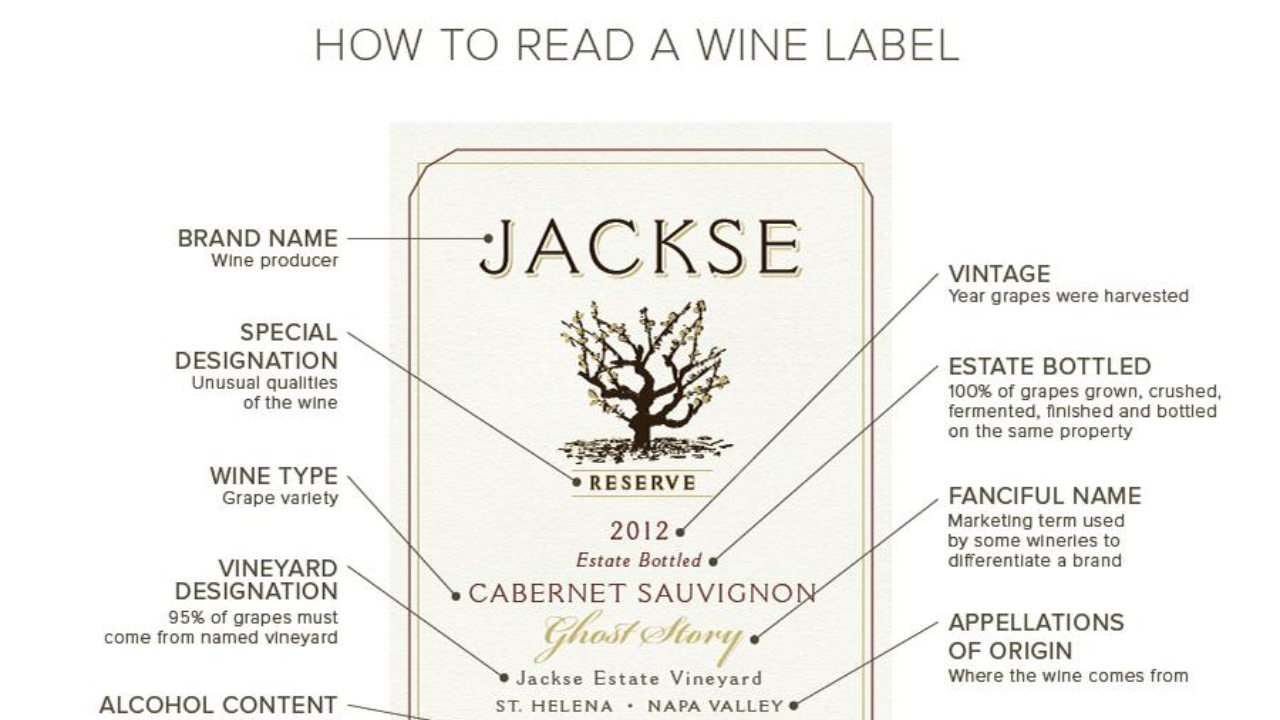
Walking through a wine shop can feel overwhelming when every bottle is covered in elegant fonts, foreign words, medals, vintage years, and mysterious classifications. Yet once you understand how to read a wine label, you can instantly identify a wine’s style, quality level, flavor profile, aging potential, and even whether it matches your dinner plans.
Wine labels are essentially a roadmap. They tell the story of where the wine comes from, which grapes were used, how strong it is, who produced it, and sometimes even how the wine was aged.
The biggest difference most beginners notice is the contrast between Old World and New World wine labels:
- Old World labels focus on the region
- New World labels focus on the grape variety
Understanding this single concept already puts you ahead of most casual wine drinkers.
Why Wine Labels Matter
A wine label helps you:
- Predict taste and body
- Understand sweetness or dryness
- Identify grape varieties
- Estimate quality level
- Pair wine with food
- Compare wines confidently
Professional sommeliers often decide whether a bottle suits a meal simply by scanning the label for a few seconds.
The Anatomy of a Wine Label
Every wine label contains several core pieces of information.
1. Producer or Winery Name
This tells you who made the wine.
Examples:
- Robert Mondavi Winery
- Château Margaux
- Antinori
Well-known producers often signal consistency and reputation.
Where It Appears
Usually at:
- the top center,
- large font,
- or in decorative script.
2. Vintage Year
The vintage tells you the year the grapes were harvested.
Example:
- 2019
- 2021
- 2016
Why It Matters
Weather conditions affect grape quality dramatically.
Cool years may produce:
- lighter wines,
- higher acidity,
- more elegance.
Warm years often create:
- riper fruit,
- higher alcohol,
- fuller body.
Example
2019 < 2021
This doesn’t mean 2019 is worse than 2021 — only that wine vintages differ based on climate and region.
3. Region or Appellation
This is one of the most important clues on the label.
The appellation tells you:
- where the grapes were grown,
- regional production laws,
- and often expected wine style.
Examples of Famous Wine Regions
France
- Bordeaux
- Burgundy
- Champagne
Italy
- Tuscany
- Barolo
- Chianti
United States
- Napa Valley
- Sonoma County
- Willamette Valley
Spain
- Rioja
- Ribera del Duero
4. Grape Variety
This tells you which grapes were used.
Common grape names:
- Cabernet Sauvignon
- Pinot Noir
- Chardonnay
- Sauvignon Blanc
- Merlot
- Syrah
New World Wines
Countries like:
- the United States,
- Australia,
- New Zealand,
- Chile,
- South Africa
usually display the grape prominently.
Example:
“Cabernet Sauvignon”
This makes New World labels easier for beginners.
5. Alcohol Percentage (ABV)
The alcohol by volume tells you how strong the wine is.
Example:
- 12.5%
- 14.8%
- 15%
General Rule
12% < 15%
Lower alcohol wines are often:
- lighter,
- fresher,
- more acidic.
Higher alcohol wines are usually:
- richer,
- fuller-bodied,
- fruitier.
6. Classification Terms
These terms indicate wine quality standards.
France
Examples:
- AOC / AOP
- Grand Cru
- Premier Cru
Italy
Examples:
- DOC
- DOCG
- IGT
Spain
Examples:
- Crianza
- Reserva
- Gran Reserva
These classifications often regulate:
- aging requirements,
- grape varieties,
- geographic boundaries,
- production methods.
Old World vs. New World Wine Labels
This is the most important concept for understanding wine labels.
Old World Wine Labels
Old World countries include:
- France
- Italy
- Spain
- Germany
- Portugal
These labels emphasize:
- region,
- heritage,
- classification.
The grape may not appear at all.
Example
A Bordeaux bottle may simply say:
“Pauillac”
Wine experts already know Pauillac usually means:
- Cabernet Sauvignon dominant blend,
- full-bodied,
- structured red wine.
New World Wine Labels
New World countries include:
- USA
- Australia
- Argentina
- Chile
- New Zealand
These labels prioritize:
- grape variety,
- bold branding,
- easy readability.
Example
“Napa Valley Cabernet Sauvignon”
This immediately tells beginners:
- region,
- grape,
- likely flavor profile.
How to Quickly Predict Taste From a Label
If You See:
“Reserve”
Usually indicates:
- extra aging,
- premium selection,
- richer style.
If You See:
“Estate Bottled”
The winery controlled:
- grape growing,
- production,
- bottling.
Often signals higher quality.
If You See:
“Dry”
Very little residual sugar.
If You See:
“Late Harvest”
Sweeter dessert-style wine.
Common Wine Label Terms Explained
| Term | Meaning |
|---|---|
| Vintage | Harvest year |
| Varietal | Grape type |
| Appellation | Wine-growing region |
| Estate Bottled | Produced entirely by winery |
| Reserve | Special selection or aging |
| ABV | Alcohol percentage |
| Cru | Growth/classification level |
| Organic | Made with organic grapes |
How Experts Read a Wine Label in Seconds
Professional tasters usually scan labels in this order:
- Region
- Producer
- Vintage
- Grape variety
- Alcohol percentage
- Classification
This instantly reveals:
- likely flavor,
- structure,
- aging style,
- food pairing potential.
Beginner Mistakes When Reading Wine Labels
Judging by the Front Artwork
Fancy labels don’t guarantee quality.
Ignoring Alcohol Percentage
ABV strongly influences body and richness.
Confusing Sweetness With Fruitiness
A wine can taste fruity while still being dry.
Assuming Expensive Means Better
Some affordable wines outperform luxury labels.
Best Wines for Practicing Label Reading
Beginners learn fastest by comparing bottles side-by-side.
Try comparing:
- Bordeaux vs Napa Cabernet
- Burgundy vs Oregon Pinot Noir
- Rioja vs California Tempranillo blends
This helps you connect:
- label information,
- geography,
- and taste.
Final Thoughts
Learning to read a wine label transforms wine from confusing to enjoyable. Instead of choosing bottles randomly, you begin understanding the story behind each wine:
- where it came from,
- how it was made,
- what it may taste like,
- and whether it matches the experience you want.
The more labels you study, the faster patterns appear. Eventually, a quick glance at a bottle can tell you almost everything you need to know before the cork is even opened.